
Kentucky Arrest to Court Records
The arrest-to-court path is a sequence. Law enforcement books a person into a county jail or regional detention facility. The jail record may show the arresting agency, booking date, charges, bond, housing, and a booking photo if the roster publishes one. The court record begins when the charge is filed in court, reviewed, amended, indicted, dismissed, diverted, or disposed. A jail roster is not the official court record, and a court docket is not the live custody roster.
Kentucky Court of Justice systems provide the statewide case and docket routes. County circuit court clerks remain the official records offices for certified court documents. Docket data can change, so exact hearing status should be checked with the clerk when travel, release, bond, or legal planning depends on it.
The KYeCourts public case information guest login is the statewide entry for public case information after a jail arrest.
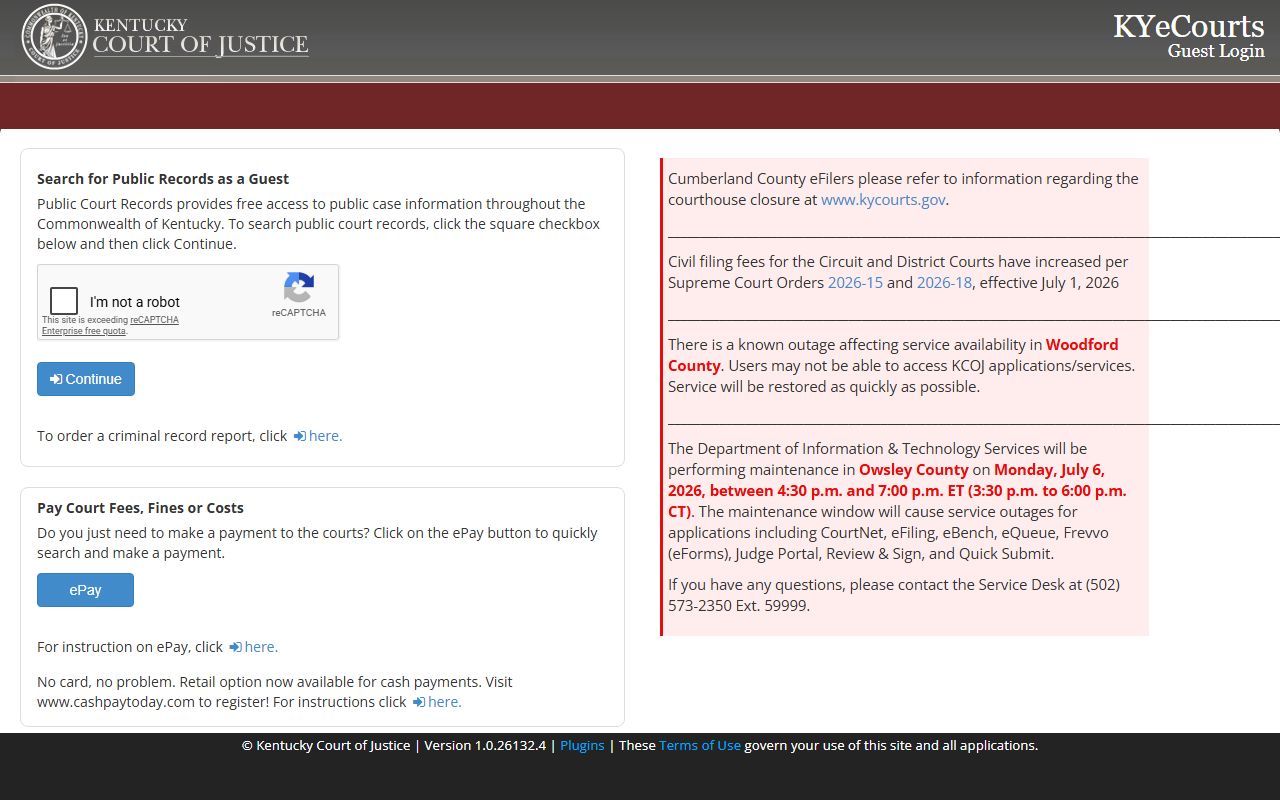
KYeCourts can help connect a booking to a case number, filed charge, or disposition when the information is public.
Search Kentucky Court Records
Start with the county where the arrest or charge was filed. Use the person's name, case number if known, and approximate filing date. If the roster charge does not match the court charge exactly, do not assume the record is wrong. Prosecutors can amend charges, present an indictment, dismiss counts, merge counts, or file a different charge label in court. The court record is the better source for the filed case, while the jail roster is the better source for current custody.
- Find the booking county or court county from the jail record.
- Search KYeCourts by name or case information when public access is available.
- Check the docket portal for hearing dates, then verify important dates with the circuit court clerk.
- Use the jail roster or KOOL only for custody status, not as the final case disposition.
The Kentucky Court of Justice docket portal is the statewide route for public docket searches.
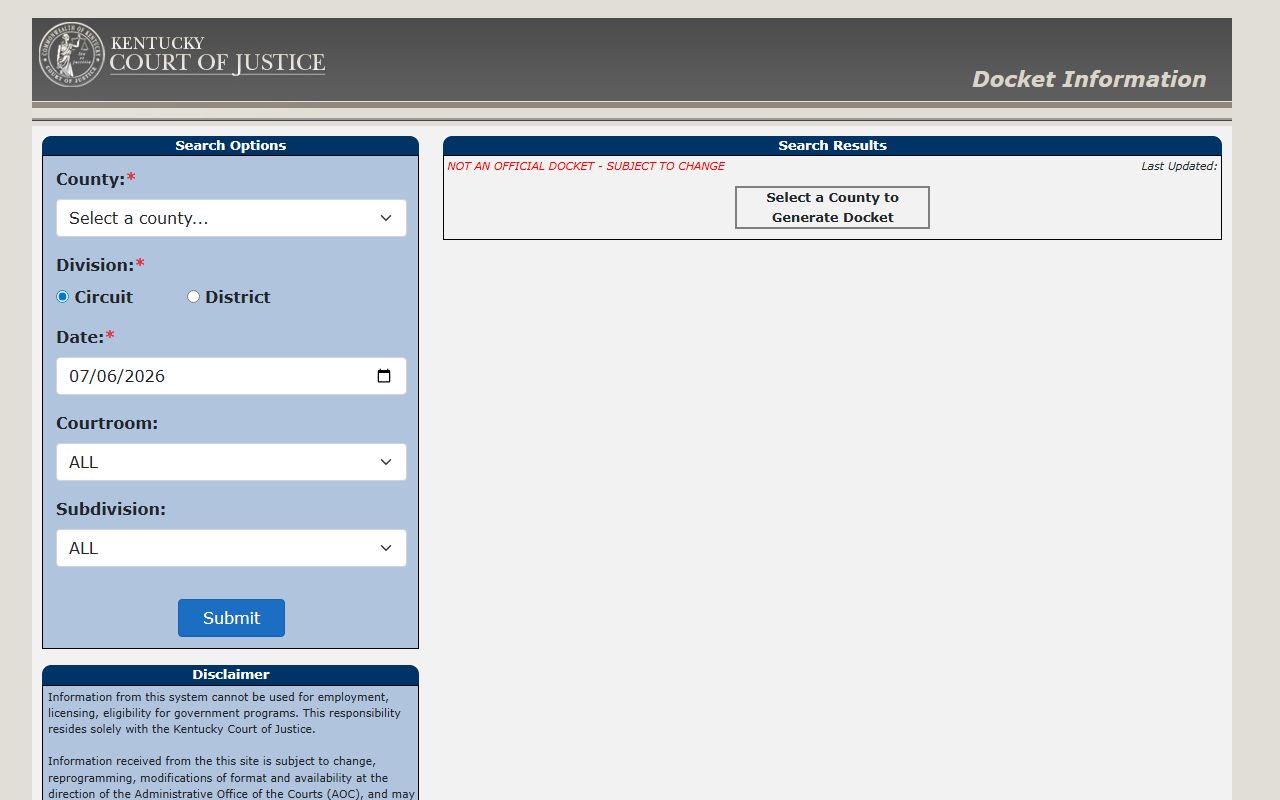
Dockets are useful for timing, but certified records and exact case status still come from the appropriate clerk.
Kentucky Charging Documents
A court case may begin with different charging documents depending on the offense, prosecutor action, and grand-jury path. The label matters because it tells the user where the case is in the process. A complaint often appears early. An information can reflect prosecutor-filed charges in allowed cases. An indictment follows grand-jury action and can replace or change the way charges appear compared with a booking roster.
| Document | Common Meaning | Search Point |
|---|---|---|
| Complaint | Initial criminal accusation or sworn charging record. | Often near the first court appearance. |
| Information | Prosecutor-filed charging document where allowed. | May reflect negotiated or formal filing path. |
| Indictment | Grand-jury charge document. | Can change charge labels from the booking record. |
Kentucky Charge Status
Charge status is not the same as custody status. A charge can be pending while a person is out on bond. A charge can be dismissed while an old booking photo still appears in archived material until the custodian updates or restricts access. A conviction can result in a county jail sentence, probation, state prison, or another outcome. Court records after a jail arrest should be read with the date and source in mind.
| Status | What It Means |
|---|---|
| Pending | The case is open or awaiting a court event. |
| Dismissed | The charge was ended by court or prosecutor action. |
| Amended | The court charge changed from an earlier label. |
| Diverted | The case follows a diversion path subject to court terms. |
| Convicted | The court entered guilt by plea, verdict, or other legal result. |
Charge vs Conviction
Booking charges and court charges are allegations until a final disposition says otherwise. A jail roster may show why the person was booked. A court record shows what was filed and what happened next. A conviction means the court has entered a legal finding or plea outcome. Kentucky court records after an arrest should not be summarized as guilt unless the disposition supports that statement.
| Term | Use It For | Do Not Treat It As |
|---|---|---|
| Arrest | Custody event and booking process. | Proof the person committed the offense. |
| Charge | Allegation filed or listed in jail/court records. | Final judgment. |
| Conviction | Final guilt result by plea or court finding. | Every arrest or every booking charge. |
Important: A booking record is not proof of guilt, and charges can be amended, dismissed, diverted, merged, or expunged.
Sealed and Expunged Records
Open records have limits. Kentucky records can be restricted by juvenile law, privacy rules, medical protections, active-investigation exemptions, sealed-record orders, expungement, or other court limits. KRS 61.878 lists exemptions under the Open Records Act. When a case is sealed or expunged, public access may be limited even if an older booking reference once appeared online. The proper route is the court clerk or the agency that holds the record.
Sealing and expungement also create timing problems for online users. A jail roster, court portal, search partner, and agency archive may not update at the same moment. If the court has entered an expungement or sealing order, the person should use the official court and agency process rather than relying on a search-result screen. County jails, KY DOC, and courts each control different records, so one agency may need proof of the order before changing its own display.
| Record Type | Public Access Point | Limit |
|---|---|---|
| Open court case | KYeCourts or circuit court clerk | Docket data can change and may not be certified. |
| Sealed case | Court order controls access | Public search may not show the record. |
| Expunged matter | Court and agency process | Access and agency display are legally restricted. |
Court Records and Custody
Court records after a jail arrest should be paired with the correct custody source. Use the county roster for current jail housing, KOOL for state prison or supervision, VINELink for custody alerts, and BOP or ICE for federal channels. Bond, warrants, detainers, parole violations, federal holds, or ICE detainers can change where a person is held even when the state court case remains in the same county.
Use the court record to confirm the filed charge path, not the live bed assignment. Use the jail roster to confirm current local custody, not the final judgment. Use KOOL when the case has led to state custody or supervision. That separation matters in Kentucky because a person can be booked locally, appear in court, remain in a county jail as a state-related inmate, transfer to a KY DOC prison, or leave custody while the court case continues.
The Kentucky VINELink portal can help monitor custody changes after a case is found.

VINE alerts supplement the court record but do not replace the jail, DOC, or clerk for official confirmation.
The KY DOC KOOL information page is the state route when a court result leads to DOC custody or supervision.
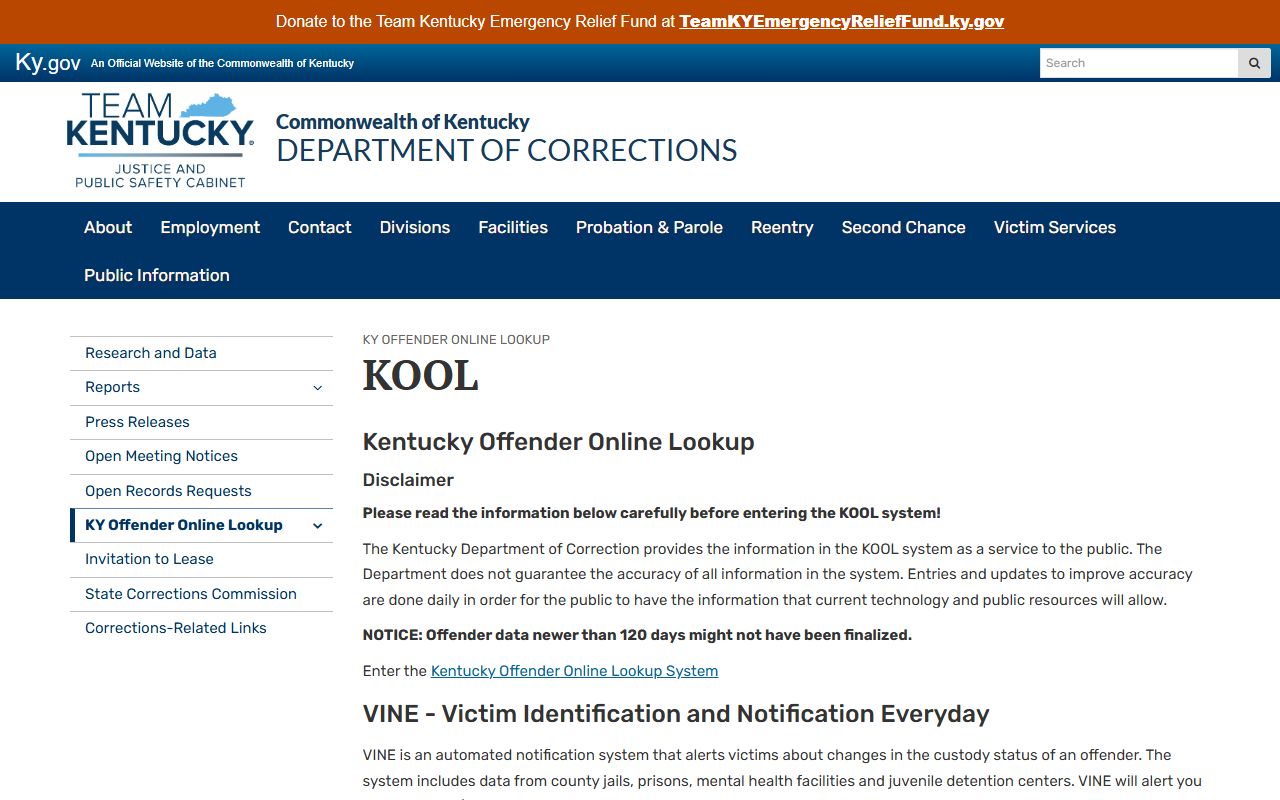
Once a person enters state custody, KOOL may become the better custody source than the county booking page.
If a case has multiple counties, use the filing county for the court record and the holding county for the jail record. Kentucky regional jail routing can make those places different. A transfer, warrant, detainer, or sentence can also move the person while the original court case remains in the arrest county.
For certified copies, final dispositions, expungement status, or sealed-record questions, contact the circuit court clerk instead of relying only on a screen result. Clerk records control official case proof.